


Agri-tech refers to the idea of leveraging innovative technologies to transform agriculture, and enhance efficiency, sustainability, and food security across global farming systems. By empowering farmers through better supply chain management, enhanced market access, and improved agricultural practices, agri-tech can significantly boost food safety around the globe. Smallholders, who constitute a significant percentage of the world’s food producers but frequently lack the resources to maintain consistently high safety standards, are especially in need of these technological developments.
Despite producing one-third of the world’s food, many smallholder farmers lack access to markets, modern equipment, and credit solutions. Strengthening this segment is critical for global food security, especially in light of climate uncertainty, population growth, and supply chain disruptions. In addition to being a societal goal, empowering smallholders is a strategic investment in sustainable food systems, and it continues to be the focus of several important forums, like the forthcoming Gulfood 2026, the largest annual food show which will take place from January 26 to 30 in Dubai.
Digital platforms, IoT, and data-driven solutions are actively being used to bridge gaps in knowledge, productivity, and market access, thereby transforming traditional farming into a connected, knowledge-based sector. Several of these innovations are set to be showcased at Gulfood 2026 where they will introduce new platforms, including Gulfood Startups, an international hub for emerging food and tech entrepreneurs and investors, and Gulfood AI, an inventive platform focused on AI, robotics, and digital intelligence for the F&B industry. The event is intended to promote innovation, strategic networking, and high-level dialogue in the food and beverage industry, as well as to assist smallholders in transitioning from survival to commercially viable, scalable farming.
Since the emphasis is on innovation, there is a need to understand these technologies and their impact. Precision farming technologies – such as sensors, satellite imagery, and drone monitoring – enable data-driven decisions on soil health, irrigation, and pest control, reducing input costs while improving yield quality and traceability. Vertical farming, with its stacked indoor systems and controlled environments, allows for year-round crop production using minimal land and water, while also reducing long-distance transportation. These innovations collectively strengthen local food systems and ensure a steady supply of safe, high-quality produce to global markets.
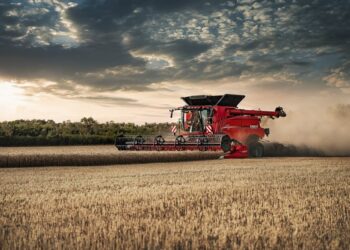
Complementing these advancements are cutting-edge digital technologies that further optimise agricultural operations. Artificial intelligence and machine learning tools can help predict weather patterns, optimise planting schedules, and detect crop diseases early, conserving resources and boosting resilience. Robotics and automation – such as autonomous tractors, robotic harvesters, and aerial drones – further streamline labour-intensive tasks, enhancing efficiency and scalability. Meanwhile, blockchain technology is transforming agricultural supply chains by ensuring transparency, traceability, and food safety, while also combating fraud.
Improved traceability from blockchain and IoT reviews, optimised input timing through digital advisory services, efficient water monitoring supported by WEF initiatives, and reduced postharvest losses made possible by digital finance and improved market connections can all contribute to improvements in food safety. [2] Together, these technologies are empowering farmers, especially smallholders, to meet the growing demand for secure, sustainable, and resilient food systems.
Besides these technological improvements, external assistance is also crucial for farmers’ advancement. Agri-tech startups today are providing underserved farmers with access to credit and insurance through blockchain, digital payment systems, and microloans. These systems strengthen resistance to crop failures or market shocks and lessen financial vulnerability. Such financial access makes it possible to invest in improved technology, fertilisers, and seeds, which initiates a positive cycle of growth. Agri-Tech is expected to be a central topic of discussion among policymakers, food scientists, technology experts, business owners, and traders at Gulfood 2026, which will set the future course of the global food industry.
Another significant aspect is digital marketplaces and traceability, which eliminate middlemen and empower farmers with better market visibility and more equitable prices. Direct farm-to-business relationships improve quality assurance and transparency, raising global standards for food safety. More importantly, traceable supply chains bring in international consumers and provide smallholder communities with improved export opportunities.
Lastly, agri-tech is facilitating the adoption of climate-smart methods, such as drought-resistant seeds and predictive irrigation. Real-time data from these advanced solutions can lower the risk of crop loss by enabling farmers to quickly adjust to weather changes. By building resilience at the grassroots level, individuals and communities will be better equipped to ensure long-term food security and stability.
To register and for information visit Gulfood.com.