

Feeding Livestock in a Hotter Future – Al Dahra on Nutrition, Forage Quality and Resilience
The future of livestock production amidst a changing and challenging climate – exploring the importance of advanced nutrition, forage quality, and technical expertise in supporting dairy and livestock producers. How farmers can improve productivity, optimise feed utilisation, and adapt for the future.
1.Al Dahra is a global leader in forage production and animal nutrition. Where does the business stand today, and which markets are driving growth?
Al Dahra today is one of the world’s largest forage and feed suppliers, operating an integrated farming, sourcing, processing and logistics platform that spans more than 20 countries and serves over 40 markets globally. The business supplies approximately 3 million tonnes of feed commodities annually and supports dairy and livestock producers across the GCC, Asia and international markets.
Our growth is being driven by increasing demand for high-quality, reliable feed solutions in regions where dairy and livestock production are expanding despite resource constraints. Saudi Arabia remains one of our most important markets, where we are the largest commercial importer of animal feed and maintain long-standing partnerships with major dairy producers, feed mills and distributors. We are also seeing strong demand across the UAE, China, Japan and South Korea, where customers increasingly value supply reliability, traceability and consistent forage quality.
What differentiates Al Dahra is that we operate across the value chain, from farming and production to logistics and delivery. This allows us to provide customers with year-round feed security while maintaining quality and consistency, even during periods of market disruption.
2. The Gulf imports much of its food. As a UAE company with farms and sourcing origins abroad, how does Al Dahra securely manage feed supply for livestock producers in the region?
For countries with significant dairy and livestock sectors, food security begins with feed security. Every litre of milk and every kilogram of animal protein depend on reliable access to high-quality forage and feed.
Al Dahra manages this challenge through diversification. We operate farming, sourcing and processing platforms across Europe, Africa, the Americas, Asia and the Middle East, creating multiple origins, supply routes and logistics options. This multi-origin model reduces dependence on any single geography and strengthens continuity when trade corridors or production regions come under pressure.
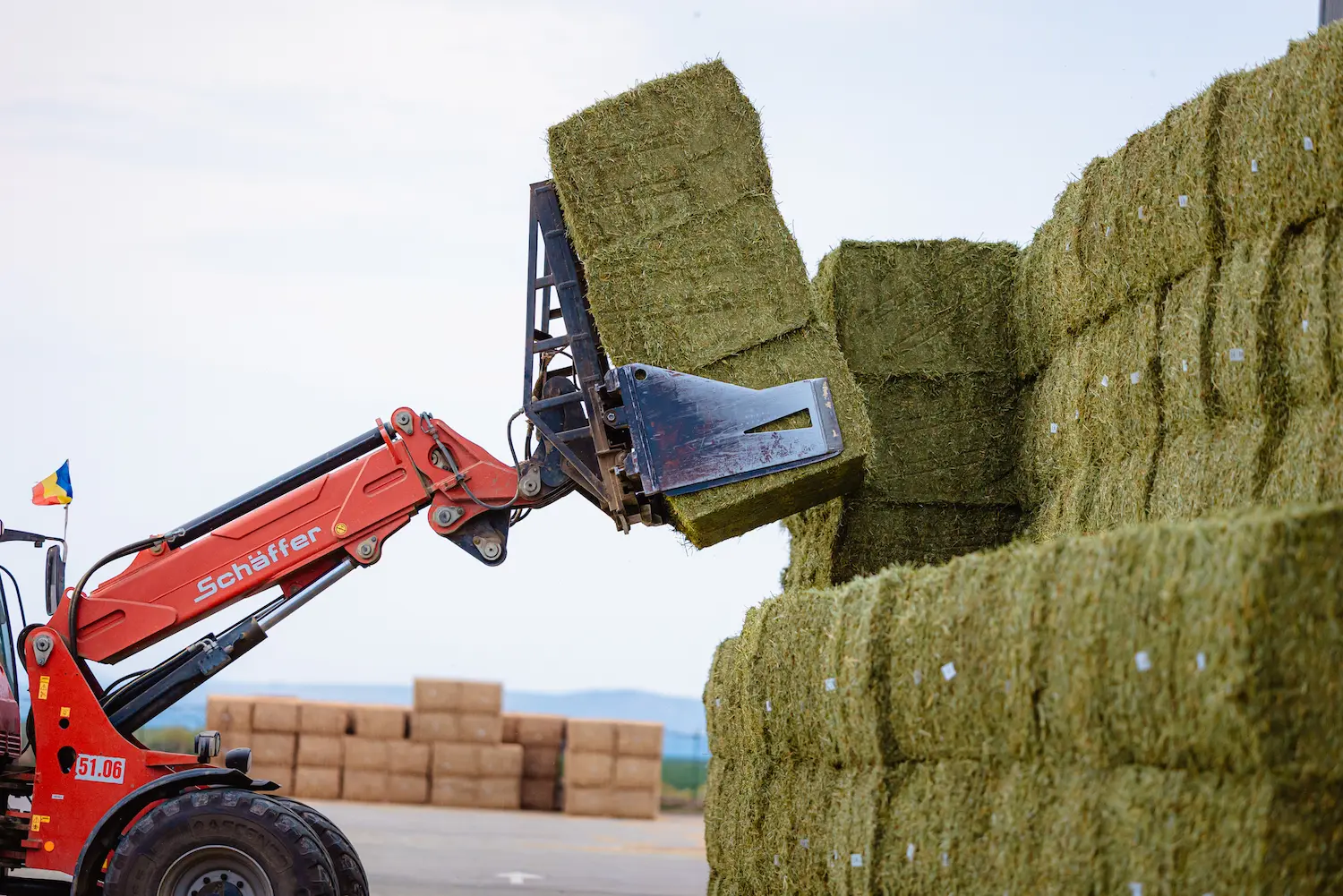 Our logistics network can access 87 export ports and 46 import ports, moving approximately 300,000 TEUs annually through road, rail, sea and inland waterway networks. During the onset of the regional disruptions, Al Dahra successfully coordinated nearly 300 shipments across 27 ports and four continents within a six-week period, while maintaining continuity of supply to customers. Around 10% of shipments were rerouted, demonstrating the importance of flexibility and contingency planning.
For GCC livestock producers, this means greater certainty. Our objective is to ensure customers have access to the feed they need to maintain livestock productivity and food production, even during regional disruptions.
3.Forage quality has a direct impact on milk yield and animal health. In light of challenging circumstances and heat stress, how does Al Dahra make sure the forage it delivers meets consistent quality standards?
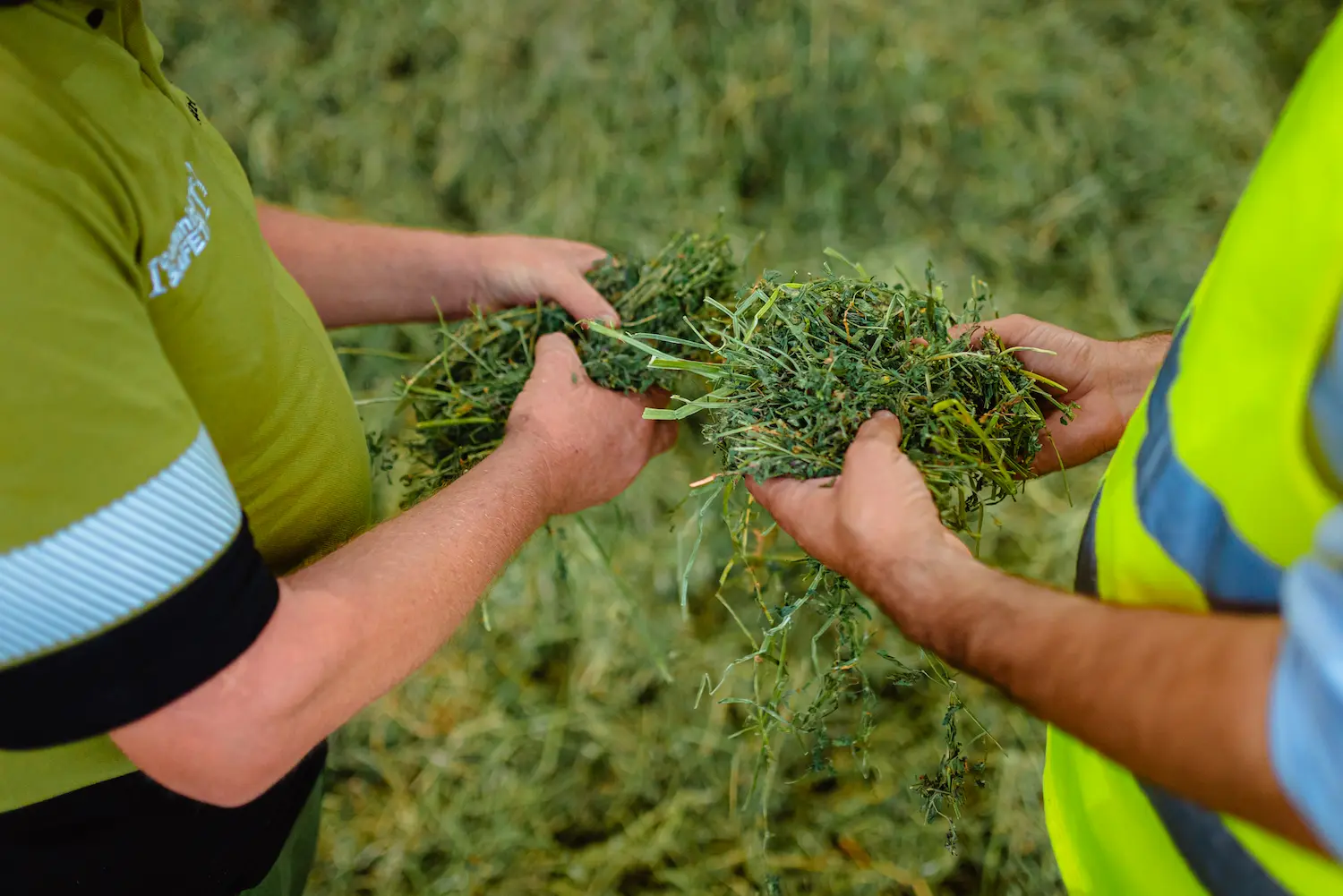
Forage quality is fundamental to efficient dairy and livestock production, particularly in hot climates where animals are already under stress. Al Dahra assesses quality through three connected areas: nutritive value, physical condition and hygiene, and consistency.
What is important is that true forage quality goes beyond appearance. Green hay is not automatically highly nutritious, and protein levels alone do not tell the full story. We place significant emphasis on laboratory analysis, particularly fibre digestibility, because it directly influences feed intake, energy supply and animal performance.
Quality assurance starts at origin, where we work closely with our farms, suppliers and local partners on the factors that determine forage quality, including variety selection, harvest timing, moisture management, processing and storage. This is supported by representative sampling, laboratory testing, traceability and quality verification throughout the supply chain.
Consistency is equally important. A forage may test well on paper, but if quality varies between shipments, feeding performance can also vary. Our focus is therefore on delivering reliable, repeatable quality that nutritionists and producers can confidently build rations around.
During periods of heat stress, when cows often reduce feed intake, highly digestible and palatable forage becomes even more critical. Our objective is to connect quality assurance with practical feeding value, providing feed solutions that support animal health, milk production and farm profitability.
4. What else is Al Dahra doing to help mitigate challenges brought on by climate change and rising heat? How is it futureproofing the industry?
Climate resilience is becoming one of the defining challenges facing agriculture. Rising temperatures, water scarcity and increasing weather variability require a new approach that combines agronomy, technology, supply chain resilience and sustainable farming practices.
Across our global platform, more than 92,000 hectares are digitally monitored using integrated farm management systems, satellite imagery, sensors and precision agriculture technologies. We are also developing AI-enabled tools that help optimise irrigation, anticipate crop stress and improve resource efficiency. We estimate that AI-supported operational decisions can improve yields by roughly 10% without increasing land, water or input consumption.
Water productivity is another major focus. Al Dahra manages approximately 72,000 hectares of irrigated farmland and more than 440 million cubic metres of water annually, providing significant expertise in efficient irrigation and crop management. For the Gulf region, some of the largest water savings have come from sourcing feed through resilient global supply chains rather than producing all feed domestically.
We are also expanding regenerative agriculture practices across our operations. More than 48,000 hectares are already managed under regenerative frameworks, with a target of 75% by 2030. Healthier soils improve water retention, biodiversity and resilience, helping agricultural systems perform more reliably under changing climate conditions.
5. Al Dahra farms across Europe, Africa and the Middle East and serves more than 40 markets. How does that global footprint benefit GCC livestock producers, and which global trends will shape the feed sector in the years ahead?
Al Dahra’s global footprint is valuable because of the resilience and flexibility it creates for livestock producers across the GCC. For customers in Saudi Arabia, this means access to a more secure and diversified feed supply. Rather than relying on a limited number of origins, we continuously evaluate production regions and work with farmers and local partners to develop supply chains that can deliver the quality and specification our customers require. That can involve everything from crop selection and harvest timing to improvements in processing, quality assurance and laboratory capabilities.
Looking ahead, one of the biggest trends shaping the sector will be the diversification of the forage basket itself. As water scarcity and climate pressures increase, resilience cannot be achieved by sourcing alfalfa from more countries alone. The industry will increasingly incorporate complementary forage options such as annual ryegrass, oat hay, triticale and other small-grain cereal hays. When properly selected and harvested, these products can work alongside premium alfalfa to help bridge gaps in supply, quality and seasonal availability.
Our role is to combine global sourcing, origin development and technical expertise to ensure every forage solution is quality-verified and fit for purpose. This is how we aim to move beyond selling commodities and helping livestock producers build more resilient and productive operations for the future.