


The agricultural landscape of the Gulf and wider Middle East is undergoing a significant transformation. While improving soil fertility and water-use efficiency remains a priority, growers today face increasingly complex challenges. Climate change, extreme temperatures, water scarcity, salinity, declining soil quality, and rising demands for productivity are reshaping agricultural practices throughout the region.
For decades, humic substances have helped agriculture in arid and semi-arid environments improve soil structure, nutrient retention, water efficiency, and plant resilience. The next stage is to combine this proven foundation with integrated, region-specific products and technologies that respond to increasingly complex growing conditions.
At Humintech, this evolution is guided by the SMART principle, turning five decades of expertise into solutions that are Sustainable, Multifunctional, Areal, Regenerative, and Technology-Advanced:
SMART Agriculture Through Region-Specific Solutions
Across the Gulf; sandy soils, low organic matter, saline irrigation, extreme heat, and pressure on water resources require more than standalone inputs. Sustainable progress depends on coordinated soil, water, nutrition, and crop-management strategies adapted to local conditions.
Humintech is bringing five decades of experience in humic substances and sustainable agriculture into this regional transformation translating established know-how into practical systems for Gulf agriculture, desert greening, and resource-efficient production.
This experience is now being extended through a new product and technology pipeline that gives the SMART principle practical form. Sustainable soil improvement and regenerative humus formation provide the foundation; multifunctional humic and fulvic technologies connect soil, water, and nutrient efficiency; areal adaptation aligns solutions with specific soils, crops, climates, and irrigation systems; and technology-advanced biostimulants and precision-application concepts target critical stages of plant development.
Building Fertility Through Humus Formation
Long-term productivity begins with the ability to build and maintain fertile, biologically active soils.
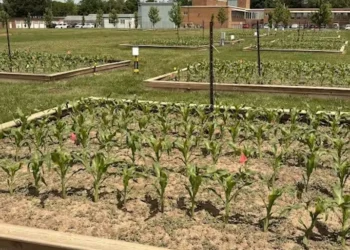
Many agricultural soils in the region contain low levels of organic matter, resulting in poor nutrient retention, weak soil structure, limited microbial activity, and reduced water-holding capacity. Under such conditions, fertiliser inputs alone are often insufficient to achieve sustainable results.
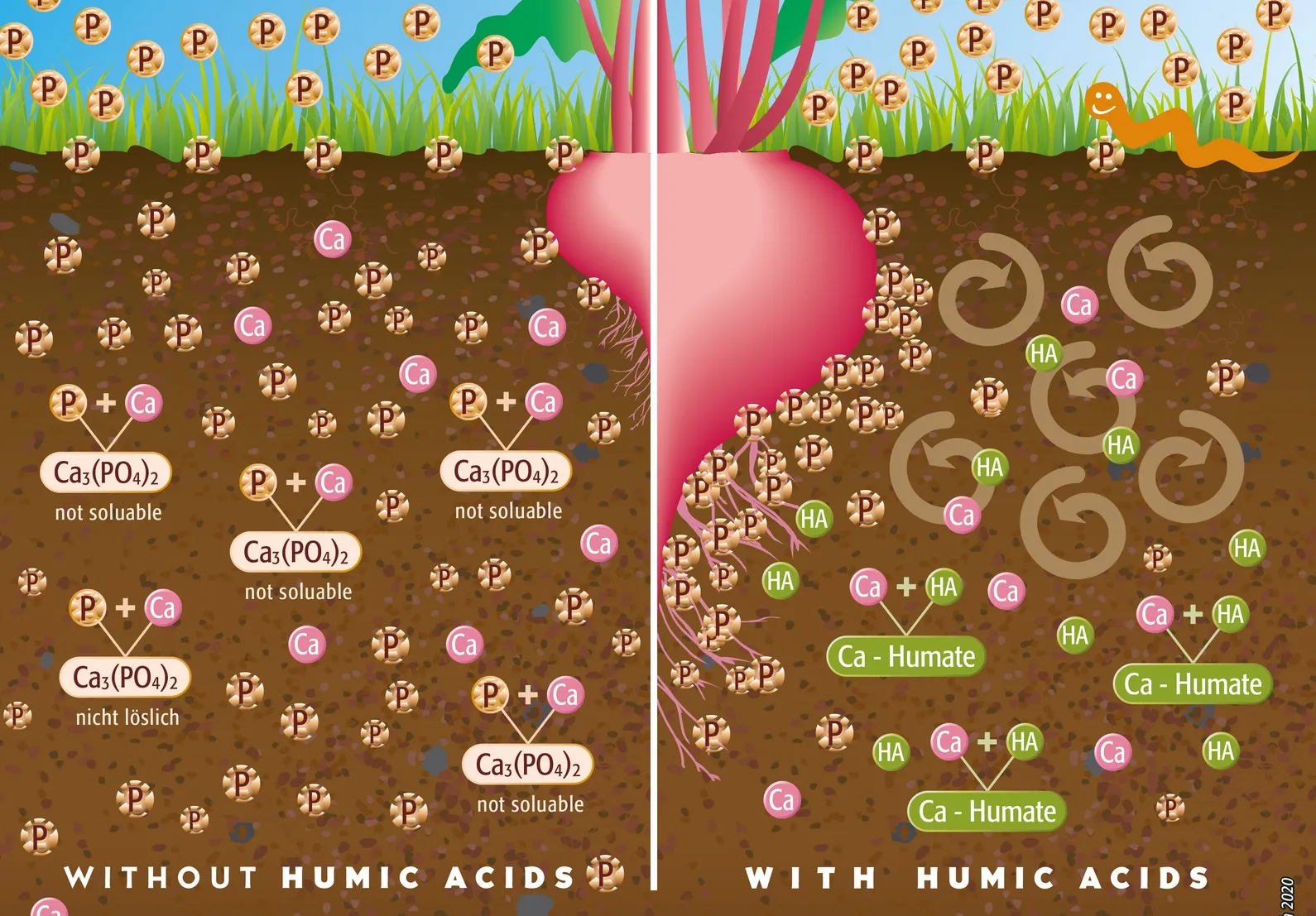
Stable humus helps address these limitations by improving soil aggregation, nutrient availability, microbial activity, and water-holding capacity.
Leonardite-based humic substances remain central to this approach. Humintech’s PERLHUMUS® provides a concentrated source of humic substances designed to support humus formation and the gradual development of healthier, more resilient soils.
The aim is not only to feed the crop, but to improve the soil’s own productive capacity and create a durable basis for growth.
Desert Greening
Across the Gulf and wider Middle East, desert greening is becoming an important instrument for climate resilience, sustainable land use, and more liveable environments. Well-designed projects can reduce dust, moderate local temperatures, limit erosion, and create productive, ecological, or recreational green spaces.
Establishing vegetation under desert conditions, however, requires more than planting and irrigation. Weak sandy substrates, salinity, extreme heat, and rapid evaporation make root-zone development and long-term maintenance difficult.
Successful desert greening therefore starts with creating a functional soil environment. Stable humus improves water and nutrient retention, soil structure, microbial activity, and root establishment, helping vegetation withstand environmental stress.
In desert greening, the SMART framework connects long-term soil building with phase-specific intervention: humic soil conditioners establish a regenerative root-zone foundation, while selected fulvic and biostimulant solutions support establishment, stress recovery, and continued plant performance. Adapted to each site and supported by precision application, this systems approach is intended to improve project durability, reduce resource demand, and help urban greening, landscape restoration, ecological corridors, and climate-adaptation investments remain viable beyond the initial planting stage.
Water Scarcity and Resource Efficiency
Water is the region’s most valuable agricultural resource, making efficiency in every irrigation cycle a strategic necessity.
Soils with higher humus content retain more water and nutrients and create better root-zone conditions. Complementary fulvic acid and biostimulant technologies can further support nutrient uptake and plant metabolism under heat, salinity, and water stress.
Together, these technologies support a clear regional objective: producing more reliably with fewer resources.
Agriculture as Part of Climate Solutions
Agriculture is increasingly expected to contribute not only to food production, but also to climate resilience and environmental restoration.
Because soils are major carbon stores, building stable humus can support fertility, long-term carbon sequestration, and more resilient production systems at the same time.
This creates a practical link between the Gulf’s growing interest in regenerative agriculture, carbon farming, climate-smart production, and the need for measurable improvements in soil performance.
Looking Ahead
The next evolution of Gulf agriculture will be defined by solutions that connect soil regeneration, efficient water use, and targeted plant performance.
Humintech’s role is to transfer 50 years of scientific, technical, and field experience into the region through a SMART innovation pathway. Its evolving pipeline of products, formulations, biological solutions, and application technologies is designed to be sustainable in impact, multifunctional in performance, adaptable by area, regenerative for soils and ecosystems, and advanced through science and precision.
By combining proven humic substance expertise with new fulvic acid, biostimulant, and precision-application concepts, the company aims to help regional partners move from individual inputs towards integrated, resource-efficient systems with durable outcomes.
The future is not about applying more. It is about applying the right solution, in the right place, at the right time.
For more information, please visit : https://www.humintech.com/